Roofing Debris Plays By Different Rules
After years of dropping roll-off boxes on Lincoln driveways, I can tell you that a roofing tear-off is the one job where people guess wrong on the dumpster more than any other. Folks look at a pile of old shingles and think, that will fit in a 20-yard box, no problem. Then the truck shows up to haul it and the container is barely a third full but sitting hard on the axle stops. Roofing debris is dense, heavy, and unforgiving, and choosing the right dumpster is less about how much space the shingles take up and more about how much they weigh. Get that wrong and you are looking at overage fees, a bin the truck cannot legally lift, or a second trip you never budgeted for.
This guide walks through the shingle weight math, how to estimate your squares, why multiple layers change everything, and why a dedicated smaller bin almost always beats an oversized one for a tear-off. We will also cover protecting your driveway, where to spot the container, and the Nebraska realities that put re-roofs on so many Lincoln homes in the first place.
The Shingle Weight Math Every Homeowner Should Know
Roofing is measured in squares. One roofing square equals 100 square feet of roof surface, or a 10-foot by 10-foot patch. Shingles are sold and bundled by the square, and it usually takes three bundles to cover one square. That bundle count is your starting point for weight.
Here is where the numbers get real. The two common shingle types weigh very differently:
- 3-tab shingles run about 60 to 70 pounds per bundle, so roughly 180 to 210 pounds per square.
- Architectural (dimensional) shingles run about 65 to 80 pounds per bundle, or roughly 200 to 240 pounds per square, and premium designer shingles can push past that.
Now scale it up. A modest Lincoln ranch with a simple gable roof might be 15 to 18 squares. At 250 pounds per square once you add felt, nails, and old flashing, that is close to two tons of debris from a single layer. A larger two-story with a steeper pitch can easily run 25 to 30 squares, and now you are staring at three to four tons before you strip a single extra layer. That is why the bin that looks half empty still trips the weight limit.
| Roof size | Single layer (3-tab) | Single layer (architectural) |
|---|---|---|
| 15 squares | ~1.4 tons | ~1.8 tons |
| 20 squares | ~1.9 tons | ~2.4 tons |
| 25 squares | ~2.4 tons | ~3.0 tons |
| 30 squares | ~2.9 tons | ~3.6 tons |
These are working estimates, not lab numbers, but they are close enough to keep you out of trouble when you pick a container. Add a little on top for old flashing, wet felt, and the nails, and you have a realistic target tonnage.
How To Estimate Your Squares
You do not need to climb up with a tape measure to get a usable number. Start with your home's footprint. Take the square footage of the floor the roof covers, then add for pitch and overhang. A low-slope roof adds about 15 percent, a common medium pitch adds around 25 to 30 percent, and a steep roof can add 40 percent or more. Divide that adjusted number by 100 and you have your squares.
For example, a 1,600-square-foot single-story home with a medium pitch works out to roughly 2,050 square feet of roof, or about 20 squares. If you saved the old wrappers from the last roofing job, count the bundles and divide by three for an even faster answer. When you are still unsure, our team has sized enough Lincoln roofs that a quick phone call with your address and rough dimensions usually lands you on the right box. If you want to double-check against container capacity, our dumpster size guide lays out what each box handles.
Single Layer Or Multiple? This Changes Everything
Here is the question that catches Lincoln homeowners off guard, especially in the older neighborhoods around the Near South, University Place, and the Havelock area: how many layers of roofing are already up there? For decades it was common practice to roof right over the existing shingles instead of tearing off. Plenty of Lincoln homes built before the 1990s are carrying two layers, and some carry three.
Every additional layer roughly doubles or triples your tonnage. A 20-square roof that would be about two tons as a single layer becomes four tons with two layers and six tons with three. That completely changes the container you need and how many pulls it will take. Before you book anything, get up on a ladder at the eave, or have your roofer check, and count the layers at the roof edge where the cut ends are visible. Tell us that number and we will size accordingly.
Why A Dedicated, Smaller Bin Wins
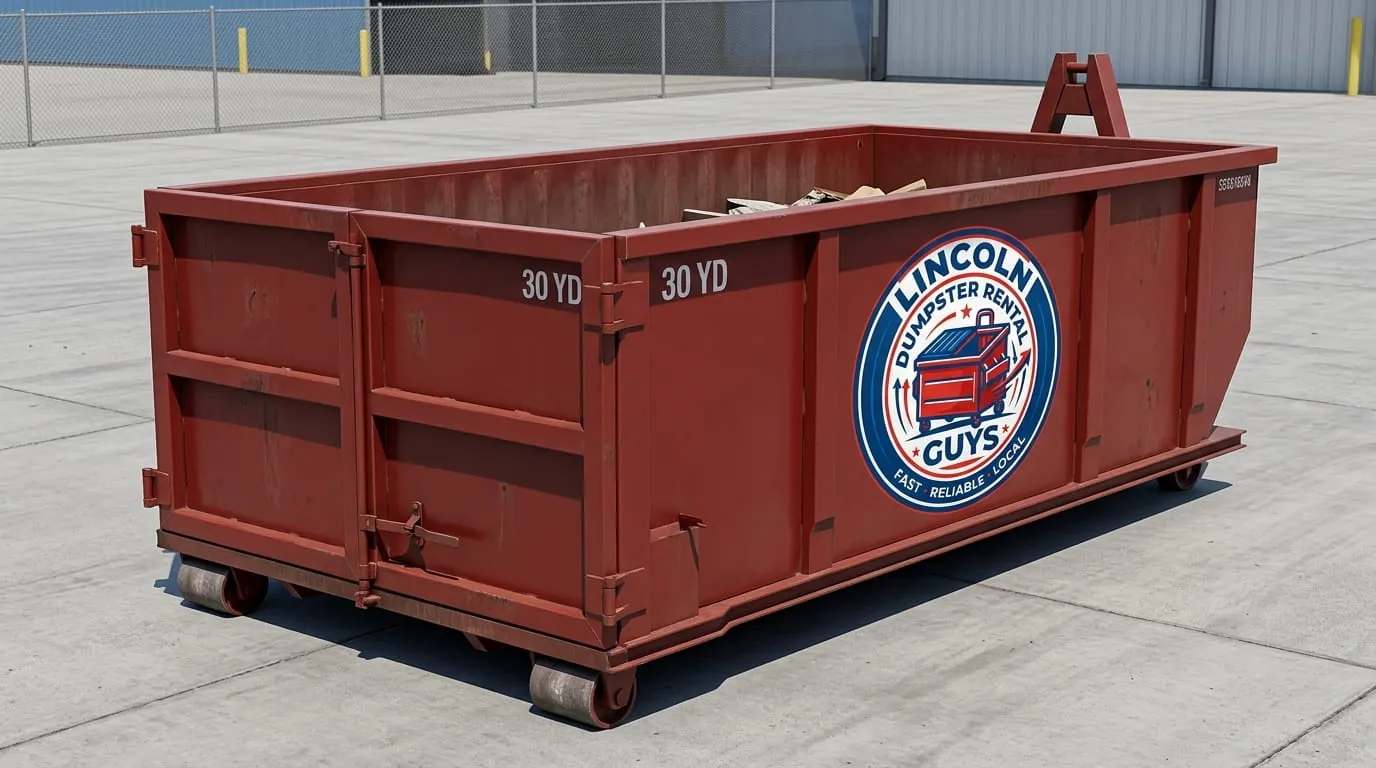
This is the part that surprises people. For roofing, you almost always want a smaller container, not a bigger one. A 10-yard or 15-yard roll-off is the sweet spot for tear-offs, and here is why. Every dumpster has two limits: the volume it holds and the weight the truck can legally haul. Roofing debris hits the weight limit long before it fills the box. Put three tons of shingles in a 30-yard container and you have a box that is one-third full but too heavy to lift and haul safely. You paid for volume you physically cannot use.
A 10-yard dumpster is built low to the ground with a higher weight allowance relative to its size, which makes it ideal for a single-layer tear-off up to roughly 15 to 20 squares. Step up to a 15-yard dumpster for larger roofs or a two-layer job. If you are tearing off a big multi-layer roof, two smaller pulls are often cheaper and safer than one oversized box that risks an overage. Our roofing dumpster rental service is set up specifically around this math so you are not paying for air.
Nails, Underlayment, And The Stuff You Forget
Shingles are only part of the load. A full tear-off also brings down felt or synthetic underlayment, old flashing, drip edge, ridge caps, and pounds and pounds of nails. A single square of roofing can hold 300 to 500 nails, so a full roof sheds tens of thousands. That weight adds up, and the nails create a cleanup hazard on the ground that we will come back to.
Underlayment does not weigh much on its own but it takes up surprising volume when it balls up, and wet felt from a rained-on tear-off gets heavy fast. Keep all of it in the roofing box rather than mixing it with a general cleanout load, and never toss in wet, sopping material if you can let it dry first, because water is dead weight you are paying to haul.
Driveway Protection And Smart Placement
A loaded roofing container is one of the heaviest things that will ever sit on your driveway, and the tear-off itself rains debris down around the drop zone. Two things protect your property. First, ask about boards under the container's rails. We can set the box on planks to spread the load and keep the steel wheels and stops from marking concrete or cracking older asphalt. Second, plan for the nail storm. A magnetic sweeper run over the driveway and lawn after the job is not optional, it is how you avoid flat tires and injured feet for months afterward. Our guide on protecting your driveway during a dumpster rental covers the details.
Placement matters just as much. You want the container as close to the tear-off side of the roof as you can safely get it, because every shingle a crew has to carry is time and money, and a box directly below the work lets them chuck debris straight in. At the same time you need clearance for the delivery truck to drop and retrieve, and enough overhead room free of power lines and branches. On a tight Lincoln lot, tell us where the roofline is and we will position the box to catch the most debris with the least carrying.
Avoiding Overage Fees
Overage fees are almost always a weight story, not a volume story. Every rental comes with a tonnage allowance, and going over means a per-ton charge on top of your quote. The way to avoid it is simple: estimate your squares honestly, count your layers, and match the container to the real tonnage instead of the pile you picture in your head. When the math is close to a limit, size up one step or plan two pulls. It is far cheaper to book the right box than to argue with the scale ticket after the fact. If you would rather not run the numbers alone, that is exactly what we are here for. Browse all our services or reach out through our contact page and we will walk you through it.
The Nebraska Angle: Hail, Wind, And Cold-Weather Timing
Lincoln roofs take a beating. Lancaster County sits squarely in hail and windstorm country, and a single spring or summer storm can send whole neighborhoods into insurance claims at once. If you have had an adjuster out and gotten approval for a re-roof, timing your tear-off well makes the whole project smoother. Late spring through early fall is prime tear-off season here, and that is also when contractors are busiest and dumpster demand peaks, so book your container early.
Cold-weather tear-offs are their own animal. Shingles get brittle in Nebraska cold and can crack and shatter during removal, which actually creates more small debris and more sweeping. If you are re-roofing in late fall, work with your contractor on timing warm enough days, and expect the frozen, ice-crusted old shingles to weigh even more coming off. Older Lincoln homes with multiple layers plus winter moisture can surprise you on the scale, so lean toward the more conservative weight estimate when in doubt. However you slice it, a re-roof is a big job, and the right roll-off makes the difference between a clean, on-budget project and a headache.
Ready To Size Your Roofing Dumpster?
Tell us your roof's rough size, how many layers are up there, and your Lincoln neighborhood, and we will put the right box on your driveway at the right price. Call Lincoln Dumpster Rental Guys today at (531) 229-1565 or check out our full roll-off dumpster rental lineup to get your tear-off moving.

Founder, Lincoln Dumpster Rental Guys — sharing straight advice from more than 15 years of local hauling experience.
Frequently Asked Questions
What size dumpster do I need for a roof tear-off?
For most single-layer tear-offs up to about 15 to 20 squares, a 10-yard roll-off is the right call because it handles the weight without wasting space. Larger roofs or two-layer jobs usually call for a 15-yard bin. Roofing is so heavy that going bigger than 15 yards rarely helps, since the truck's weight limit is reached long before the box is full. Give us your square count and layer count and we will match the container exactly.
How much does a roof's worth of shingles weigh?
Figure roughly 180 to 240 pounds per square depending on whether you have 3-tab or architectural shingles, then add felt, nails, and flashing. A typical 20-square single-layer Lincoln roof comes to around two tons. A 25 to 30 square roof can run three to four tons for a single layer, and every extra layer roughly doubles or triples that total.
Can I put multiple layers of shingles in one dumpster?
You can, but you have to plan for the weight. Each layer multiplies your tonnage, so a two-layer 20-square roof that is about four tons may need a larger bin or a second pull to stay under the weight allowance. Many older Lincoln homes carry two or three layers, so count them at the roof edge before you book so we can size the container and avoid an overage.
Why is a smaller dumpster better for roofing?
Because roofing debris hits the truck's weight limit long before it fills the box. Load three tons of shingles into a 30-yard container and it is only a third full but too heavy to haul legally, so you paid for volume you cannot use. A 10 or 15-yard bin sits lower for easier loading and carries a weight allowance matched to dense roofing debris, which is why it is the standard choice for tear-offs.
Do I need to worry about nails after a roofing tear-off?
Absolutely. A full roof sheds tens of thousands of nails, and they scatter across the driveway and lawn during the tear-off. Run a magnetic sweeper over the whole work area afterward to prevent flat tires and injuries that can turn up months later. Keeping the container close to the roofline and setting it on boards also limits the mess and protects your driveway surface.