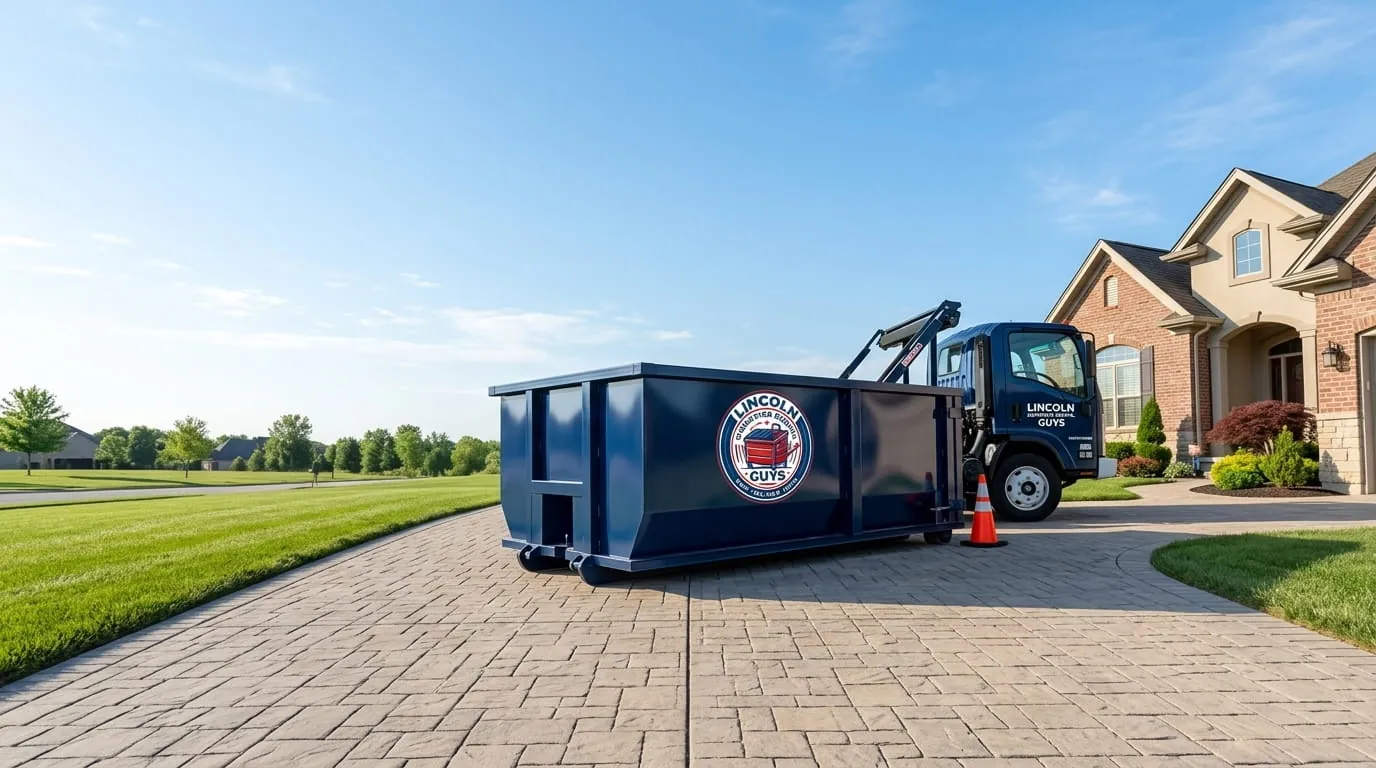
One of the first questions we hear from Lincoln homeowners and contractors is simple: do I need a permit to rent a dumpster? The honest answer is that it depends entirely on where the container will sit. If your roll-off is going on your own driveway or private property, you almost never need any permit at all. If it has to sit on a public street, alley, or the city right-of-way, that is a different story, and the City of Lincoln or Lancaster County usually wants a permit before that happens. This guide walks through the practical differences, who is responsible for pulling the paperwork, rough timelines, and the local wrinkles that catch people off guard, from newer subdivision HOA rules to Lincoln's winter snow routes.
The Short Answer: It Comes Down to Location
Think of it as two buckets. Bucket one is private property, which covers your driveway, a paved parking pad, a side yard, or a construction site you control. In almost every case in Lincoln and the surrounding Lancaster County communities, you can place a dumpster on private property without any city permit. The land is yours (or your client's), and the container is not obstructing anything the public relies on.
Bucket two is the public right-of-way. That includes the paved street, the parking lane in front of your house, an alley, or the strip of city-owned land between the sidewalk and the curb. The moment a dumpster occupies any of that space, it is sitting on shared public infrastructure, and the City of Lincoln typically requires a right-of-way or encroachment permit before it can legally be there. For properties in unincorporated Lancaster County, the county handles the equivalent approval.
Because the vast majority of our residential jobs fit neatly into bucket one, most of our customers never touch a permit application. We size the container to your driveway and place it so it stays entirely on your property. If your project genuinely requires the street, we walk you through bucket two step by step.
When You Almost Certainly Do NOT Need a Permit
If any of the following describe your situation, a permit is very unlikely to be part of the picture:
- The dumpster fits fully on your driveway with wheels and all four corners on private paving.
- You are placing it on a private parking area, a gravel pad, or a fenced yard you own.
- Your project is on a commercial lot with its own parking, and the container stays inside your property lines.
- The roll-off sits on an active construction site where the builder controls the ground.
In these scenarios the container is not blocking a travel lane, a sidewalk, or a public parking space, so the city has no reason to require an encroachment approval. Our job is simply to protect your surface and place the box cleanly. If you are worried about cracks or oil stains on concrete or asphalt, our guide on how to protect your driveway during a dumpster rental covers the boards and pads we use to spread the load.
When a Street or Right-of-Way Permit Usually Applies
Some Lincoln properties simply do not have room for a roll-off off-street. Older neighborhoods near downtown, the Near South, the Hawley and Malone areas, and parts of University Place often have short driveways, detached rear garages fed by alleys, or no driveway at all. Rowhouse-style lots and some historic districts fall into the same category. When the only realistic spot is the street or parking lane, plan on needing a permit.
A street placement permit exists so the city knows what is occupying the roadway, can keep emergency access and traffic flow in mind, and can require proper marking so the container is visible at night. It is not meant to be a hurdle; it is a coordination tool. Placing a dumpster in the street without one can lead to a notice to remove it, and in some cases a fine, so it is worth doing correctly the first time.
Alleys and Shared Access
Alleys are their own consideration. Many Lincoln alleys are narrow and serve as the only vehicle access for several homes and their garages, plus trash and recycling trucks. Even a small container can block a neighbor's garage or stop a service truck. If an alley is your only option, treat it like a right-of-way placement and confirm the rules before we deliver.
Who Pulls the Permit, and How Long It Takes
When a right-of-way permit is required, the property owner or the contractor doing the work is typically the applicant, because the permit is tied to the property and the project rather than to the hauler. That said, you are not on your own. Our team handles these placements regularly, and we help coordinate the details: the exact placement, the container dimensions, the delivery and pickup dates, and the reflective marking the city expects. We make sure the information you submit matches what actually shows up on the street.
On timing, be realistic and build in a buffer. Some right-of-way requests are turned around quickly, while others take several business days, especially if a location needs review because it sits on a busier street, near an intersection, or on a designated route. Timelines and specifics change, so we always advise confirming current processing times directly with the City of Lincoln (for properties inside city limits) or Lancaster County (for unincorporated areas) before you lock in a start date. The safest approach is to ask about the permit at the same time you schedule the dumpster, not the day before your project begins. Call us at (531) 229-1565 and we will point you to the right department and coordinate the delivery around the approval.
HOA Rules in Newer Lincoln Subdivisions
Here is a category that trips up a lot of homeowners: even when the city does not require anything because your dumpster is on your own driveway, your homeowners association still might. Many of Lincoln's newer subdivisions on the south and southeast edges of town, and in fast-growing areas like the neighborhoods around Yankee Hill, Wilderness Hills, and the developments spreading toward Hickman and Waverly, come with covenants that regulate the appearance of the street.
Common HOA provisions we see include limits on how many days a dumpster can sit visible on a driveway, requirements to place it out of view where possible, restrictions on where it can go relative to the sidewalk, and advance-notice rules for the association. None of this is a government permit, and the city has no role in it, but violating a covenant can still earn you a letter and a fine from the HOA. If you live in a newer subdivision, check your covenants or ask your association before your rental starts. When you know the rules up front, we can usually schedule delivery and pickup to fit inside your association's window.
Snow Routes and Winter Street Placement
Lincoln winters add a wrinkle that many homeowners forget until it is a problem. The city designates certain streets as snow emergency routes, and when a snow emergency is declared, parking and obstructions on those routes are restricted so plows can clear the pavement curb to curb. A dumpster sitting in the street or parking lane on one of those routes during a snow event is in exactly the wrong place, and it can be tagged for removal.
If your project runs through the winter months and requires any street placement, two things matter. First, confirm whether the street is a designated snow route. Second, keep an eye on snow emergency declarations and be ready to have the container moved. This is one more reason we prefer driveway placement whenever it is feasible: a container on your own property is not affected by snow route rules at all. If the street is truly your only option in winter, we plan the rental window and marking with plowing in mind and stay flexible on pickup timing.
Placement, Marking, and Being a Good Neighbor
Whether or not a permit is involved, good placement keeps the whole rental smooth. On a driveway, we protect the surface, keep the container clear of the garage door and any gas meters, and leave room for you to still use the space. For any street placement, expect the container to need reflective markers or reflective tape and, in some cases, cones so it is clearly visible after dark. Keep it a safe distance from intersections, fire hydrants, crosswalks, and driveways so sightlines and access stay clear.
A few neighborly habits go a long way in Lincoln's tighter neighborhoods: give the folks next door a heads-up before a street container arrives, do not let debris overflow the top rail, and keep the load level so we can haul it safely and legally. Overloaded or overweight containers are not just a hauling problem; they can become a road-safety issue that draws exactly the attention you were trying to avoid.
How Our Team Helps You Skip the Street Permit
Most of the time, the best permit strategy is not needing one. Before we ever deliver, we talk through your access and your project. If there is any way to keep the container fully on your driveway or private property, we take it. That often means recommending a container size that matches your available space rather than defaulting to the biggest box, angling the placement to fit a short driveway, or timing delivery so the truck can maneuver cleanly.
You can see the full range of roll-off options on our services page, and if you are handling a home cleanout, remodel, or roofing job, our residential dumpster rental service is built around exactly these driveway-friendly placements. When a street placement genuinely cannot be avoided, we shift into coordination mode and help you get the right-of-way approval lined up with the City of Lincoln or Lancaster County so your start date is not at risk.
Quick Reference: Permit at a Glance
| Placement Location | City/County Permit? | Other Rules to Check |
|---|---|---|
| Your private driveway or paved pad | Usually no | HOA covenants in newer subdivisions |
| Private commercial lot or job site | Usually no | Property owner approval, site access |
| Public street or parking lane | Typically yes (right-of-way permit) | Snow routes, marking, timeline |
| Public alley | Typically yes | Neighbor access, service trucks |
| Unincorporated Lancaster County road | Check with the county | County right-of-way rules |
Cost, Sizing, and Next Steps
Permits are only one piece of planning a rental. If you are budgeting the whole project, our breakdown of dumpster rental cost in Lincoln, NE walks through what actually drives the price, from container size to rental length to what you are throwing away. Between smart sizing and driveway placement, most Lincoln homeowners can keep both the permit paperwork and the cost simple.
Bottom line: for a dumpster on your own property in Lincoln, you almost certainly do not need a city permit, though you should still check your HOA if you are in a newer subdivision. For anything on a public street, parking lane, alley, or right-of-way, plan on a City of Lincoln or Lancaster County permit, mind the winter snow routes, and confirm the current requirements and timeline directly with the city or county since specifics can change. Whichever bucket you fall into, our team is glad to help you plan placement and coordinate the paperwork. Reach out through our contact page or call (531) 229-1565 and we will get your dumpster set up the right way the first time.
Founder, Lincoln Dumpster Rental Guys — sharing straight advice from more than 15 years of local hauling experience.
Frequently Asked Questions
Do I need a permit for a dumpster on my own driveway in Lincoln, NE?
In almost all cases, no. When the roll-off sits entirely on your private driveway or property and does not extend into the public street or sidewalk, the City of Lincoln does not require a permit. Just double-check your HOA covenants if you live in a newer subdivision, since some associations set their own rules about how long a container can be visible.
When does placing a dumpster require a City of Lincoln permit?
A permit is typically required whenever the container occupies the public right-of-way, which includes the street, the parking lane, an alley, or city-owned land near the curb. That placement usually needs a right-of-way or encroachment permit from the City of Lincoln, or from Lancaster County if the property is in an unincorporated area. We help coordinate these when the street is your only option.
Who is responsible for pulling the street permit, me or the dumpster company?
The permit is generally the responsibility of the property owner or the contractor doing the work, because it is tied to the property and project rather than the hauler. You are not on your own, though. Our team regularly coordinates these placements, helps you provide the right container size and dates, and makes sure the marking meets expectations. Call (531) 229-1565 and we will point you to the correct department.
How long does it take to get a right-of-way permit in Lincoln?
It varies. Some requests are approved quickly, while others take several business days, especially for busier streets or locations that need extra review. Timelines and requirements change, so we recommend confirming current processing times directly with the City of Lincoln or Lancaster County and asking about the permit at the same time you schedule the dumpster, not the day before your project starts.
Do winter snow routes affect where I can put a dumpster in Lincoln?
Yes, if the container is in the street. Lincoln designates certain streets as snow emergency routes, and when a snow emergency is declared, obstructions on those routes must be cleared so plows can work. A dumpster on your own driveway is unaffected, which is one reason we prefer private placement. If a winter street placement is unavoidable, we plan the rental window and marking around plowing and stay flexible on pickup.