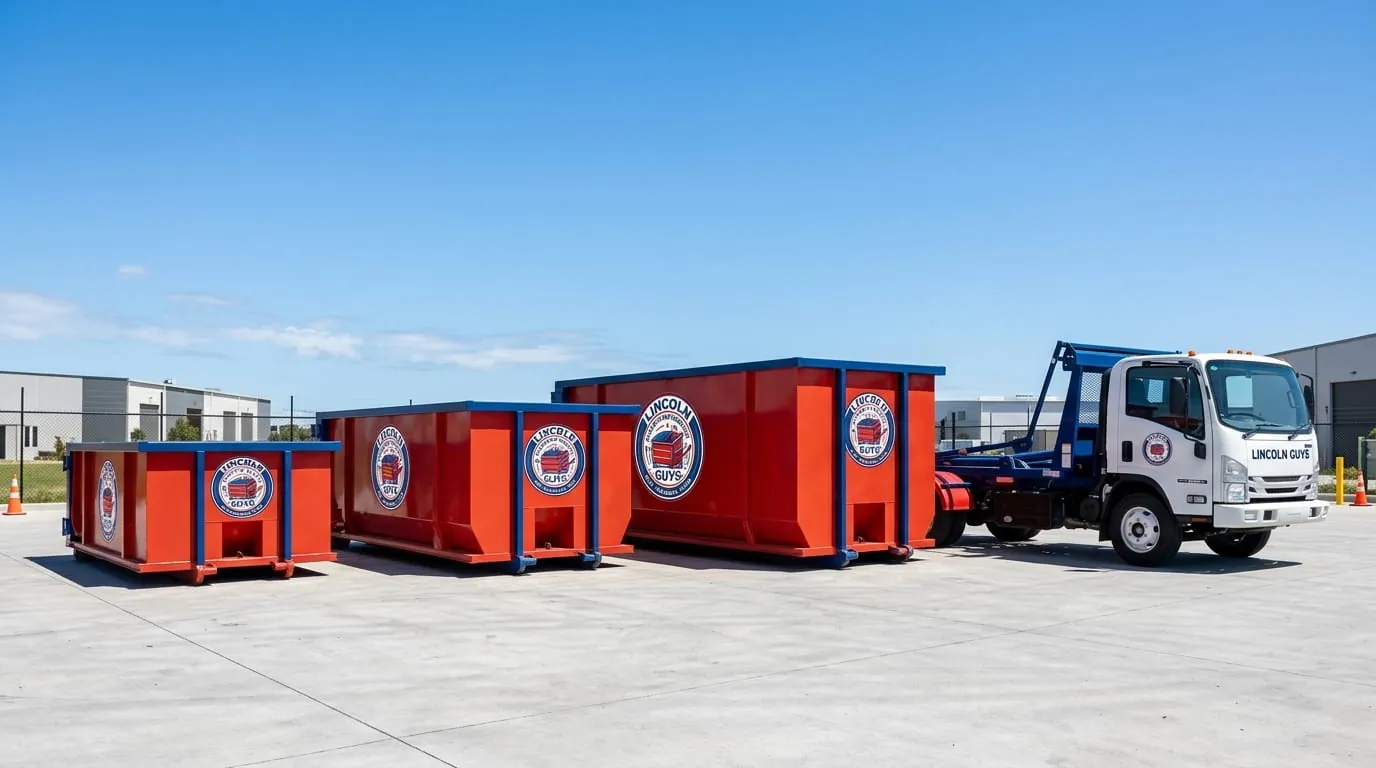
A roll-off dumpster looks harmless sitting empty in your driveway, but the physics tell a different story. An empty 20-yard container already weighs a couple of thousand pounds, and once you fill it with shingles, concrete chunks, or wet remodeling debris, the loaded weight can climb past 10,000 pounds. All of that load rests on a handful of small steel contact points: four rear wheels, two front rails or feet, and the rollers on the back edge. Concentrate that much weight onto that little surface area and you have a recipe for gouges, oil stains, and hairline cracks in the very driveway you park your car on every day.
The good news is that driveway damage during a dumpster rental is almost entirely preventable. With a few boards, some smart placement decisions, and a hauler who knows what they are doing, the vast majority of Lincoln homeowners never see a mark. This guide walks through exactly why driveways get damaged, what you can do about it, and what a good local hauler handles for you automatically.
Why Roll-Off Dumpsters Can Mark or Crack a Driveway
There are three separate ways a dumpster can leave its signature on your driveway, and understanding each one tells you how to prevent it.
Point loading and cracking
Concrete and asphalt are strong in compression when the load is spread out, but they are surprisingly weak when a heavy load presses down on one small spot. A fully loaded container transfers its weight through steel wheels and rails no wider than a few inches. That is thousands of pounds per square inch bearing straight down. On a healthy, thick, well-poured concrete slab this is usually fine. On an older driveway, a thin residential pour, or a section already showing spider cracks, that point load can be the last straw that turns a hairline into a full crack.
Scratching and gouging
Delivery and pickup are when most cosmetic damage happens. As the truck winches the container off the bed, the rear rollers drag across the surface. If the driver sets it down or drags it even a short distance, the steel edges can scrape asphalt or scratch a sealed concrete finish. Backing the truck in and repositioning the box are the highest-risk moments of the entire rental.
Staining
Dumpsters are working steel boxes. They can carry road grime, rust, and residual oil, and debris inside can leak fluids that seep out the drain hole or seams. On a light-colored or freshly sealed driveway, a rust ring or oil stain can be just as unwelcome as a crack, and it is far harder to remove than it is to prevent.
Boards and Plywood: Your First Line of Defense
The single most effective thing you can do is put a barrier between the container and your driveway. This is cheap, simple, and it addresses all three damage types at once.
- Under the wheels and rear rollers: Lay down two-by-boards, thick plywood, or dedicated dumpster boards where each set of wheels and the rear contact edge will land. This spreads the load across a much larger area and keeps steel off your surface.
- Full-length runners: For a longer container or a driveway you are especially protective of, run planks the full length under both sides so every contact point sits on wood.
- Plywood sheets for staining: A sheet of plywood or an old piece of OSB under the box catches any drips or rust before they reach the concrete.
Use lumber that is thick enough not to crack under load. Two-inch nominal boards (a true one-and-a-half inches thick) or three-quarter-inch exterior plywood, doubled up if you can, work well. Thin luan or single sheets of drywall will simply crush and do nothing. If you are renting a smaller container like a 10-yard dumpster for a bathroom remodel or a small cleanout, even a modest stack of boards under the wheels goes a long way, because the smaller box is easier to position precisely on the protection you have laid down.
Weight Distribution: Load Smart, Not Just Full
How you fill the container matters as much as what sits underneath it. When you pile all the heavy material at one end, you concentrate the load over one axle and drive extra pressure through a couple of wheels rather than spreading it across all of them.
- Spread heavy debris evenly across the floor of the container rather than dumping it all in one corner.
- Break down bulky items and lay heavy material flat so the weight rides low and even.
- Never overfill past the fill line. An overloaded box is not only unsafe and often un-haulable, it also puts your driveway under more stress than it was ever meant to bear and makes the pickup harder on the surface.
If you are unsure how much your project will generate or which container size keeps the load reasonable, our guide on what size dumpster you need walks through matching the box to the job so you are not overloading a small container or dragging an oversized one across your drive.
The Nebraska Factor: Freeze-Thaw, Summer Heat, and Winter Ice
Lincoln driveways take a beating from the weather before a dumpster ever shows up, and our climate changes the calculus in ways homeowners in milder regions never have to think about.
Freeze-thaw cracking
Lancaster County runs through dozens of freeze-thaw cycles every winter. Water works its way into the tiny pores and surface cracks of your concrete, freezes, expands, and pries the crack a little wider. Then it thaws and does it again. Over years this leaves many older Lincoln driveways with a network of surface cracks and weakened spots that look fine but have very little reserve strength left. Set a loaded dumpster on one of those weakened sections without boards and you may find the point load finishes a crack that winter started. If your drive is older or already showing cracking, boards are not optional here; they are the difference between a clean rental and a repair bill.
Summer heat and soft asphalt
On the flip side, a hot Nebraska July can push asphalt surface temperatures well past what they can hold their shape at. Warm asphalt goes soft and pliable, and that is exactly when a concentrated steel load will sink in and leave permanent dents or ruts. If you have a blacktop driveway and you are renting in peak summer, schedule the delivery for the morning when the surface is cooler, keep boards under every contact point, and try not to leave a heavy loaded box parked in one spot for weeks in the heat.
Snow, ice, and winter deliveries
Winter deliveries add their own wrinkle. A driver cannot see cracks, expansion joints, or edges under a layer of snow, and ice makes precise placement harder because the truck and the container can slide. Before a winter delivery, clear and de-ice the spot where the container will sit so the driver can see the surface and set the box exactly where you both agreed. Sand or a pet-safe de-icer around the pad helps, and it keeps you safe walking to and from the box with debris. A good hauler will work with you on timing and placement when the weather turns, which is one more reason to use a local roll-off dumpster rental company that actually knows Lincoln winters.
Where to Place It: Concrete vs. Pavers vs. Gravel
Not every surface handles a dumpster the same way, and the best placement is often not your driveway at all.
| Surface | How it handles a loaded box | What to do |
|---|---|---|
| Poured concrete | Best option if thick and in good shape; vulnerable if old or cracked | Always use boards; inspect for existing cracks first |
| Asphalt | Softens in heat, can dent and rut; scratches on delivery | Boards under every point; deliver in cooler hours |
| Pavers or brick | Individual units shift and crack under point loads; easy to gouge | Avoid if possible; full plywood platform if unavoidable |
| Gravel or dirt | Forgiving on marks but the box can sink or tilt | Use boards for a stable, level base |
Pavers are the surface to be most careful with. Their strength comes from the interlock between units, and a heavy point load can crack a paver or push it down and out of level, leaving a permanent low spot. If a paver driveway is your only option, a solid platform of plywood spreads the load across many units at once. Whenever you have the room, placing the container on the street with a permit, or on a stretch of gravel or grass, takes the risk off your finished surfaces entirely. Not sure what will fit your property? Our residential dumpster rental team can talk placement before the truck ever rolls out.
Backing, Loading, and Pickup Care
The most damage-prone moments are the ones where the container or truck is moving. A few habits keep those moments clean:
- Clear the path. Move cars, trash cans, low branches, and anything else so the driver has a straight, unobstructed line and does not have to reposition.
- Agree on the exact spot. Mark where you want the box before the truck arrives so the driver sets it once and never has to drag or re-place it.
- Watch overhead and to the sides. Point out low wires, gates, and sprinkler heads the driver cannot see from the cab.
- Do not drag it yourself. Never try to reposition a loaded or even a partly loaded container by hand or with a vehicle. That is how driveways get their worst gouges. If it needs to move, call the hauler.
Roofing jobs deserve a special mention because tear-off debris is dense and heavy, and the temptation is to load it high and fast. Keeping the weight even and the box under the fill line protects both the surface underneath and the crew loading it. If you are planning a roof project, our guide to choosing the right dumpster for a roofing tear-off covers sizing and loading for exactly this kind of heavy, concentrated debris.
What a Good Hauler Does Automatically
A lot of driveway protection should not fall on you at all. When you rent from an experienced local company, the driver is trained to protect your property as a matter of routine. That means placing boards under the container without being asked, setting the box down gently rather than dragging it, choosing the flattest and most stable spot, and slowing down on delivery and pickup so the rollers never scrape. It also means being honest with you about placement: a driver who knows Lincoln will tell you when your old drive needs extra boards or when the street is the smarter option.
At Lincoln Dumpster Rental Guys, protecting your driveway is part of the job, not an upgrade. If you have an older concrete drive, a paver surface, a winter delivery over snow, or any other concern, tell us when you book and we will plan the placement and protection around it. Ready to schedule, or just have a question about your surface? Get in touch with us or call (531) 229-1565 and we will make sure your driveway looks exactly the same the day we pick up as it did the day we dropped off.
Founder, Lincoln Dumpster Rental Guys — sharing straight advice from more than 15 years of local hauling experience.
Frequently Asked Questions
Will a dumpster crack my concrete driveway in Lincoln?
It can, but it usually will not if you take basic precautions. The risk is highest on older or already-cracked driveways weakened by Lincoln's freeze-thaw cycles, because a loaded container puts thousands of pounds through a few small contact points. Laying thick boards or plywood under the wheels and rear rollers spreads that load and prevents nearly all cracking. Healthy, well-poured concrete with boards underneath almost never has an issue.
What should I put under a dumpster to protect my driveway?
Use thick lumber or plywood at every contact point. Two-inch nominal boards (about one-and-a-half inches thick) or three-quarter-inch exterior plywood, doubled up if possible, work best under the rear wheels and the roller edge. A full sheet of plywood under the box also catches any oil or rust drips before they stain the surface. Avoid thin materials like luan or drywall, which crush under load and offer no protection.
Is it safe to have a dumpster delivered over snow or ice in winter?
Yes, with a little prep. Clear and de-ice the delivery spot before the truck arrives so the driver can see the surface, avoid hidden cracks and expansion joints, and set the box precisely without sliding. Spread sand or a pet-safe de-icer around the pad for traction and your own safety when loading. A local hauler used to Lincoln winters will work with you on timing and placement when conditions are icy.
Can I put a dumpster on my paver or asphalt driveway?
You can, but both need extra care. Pavers can crack or shift out of level under a concentrated load, so lay a full plywood platform to spread the weight across many units, or place the box elsewhere if you can. Asphalt softens in Nebraska summer heat and can dent or rut, so schedule delivery for cooler morning hours and keep boards under every contact point. Placing the container on the street or on gravel avoids the risk on finished surfaces entirely.
Does the dumpster company protect my driveway, or is that my job?
A good local hauler handles most of it automatically. At Lincoln Dumpster Rental Guys, our drivers place boards, set the container down gently instead of dragging it, choose the flattest stable spot, and advise you on placement for older or delicate surfaces. You help by clearing the path, agreeing on the exact spot ahead of time, loading weight evenly, and never trying to move a loaded box yourself. Just mention any concerns when you book and we will plan around them.